Short answer
To quiet a jerky or noisy garage door in Austin, oil the hinges and rollers, keep the tracks clean and have the springs and balance checked yearly. Most noise comes from worn rollers, which are a quick swap.
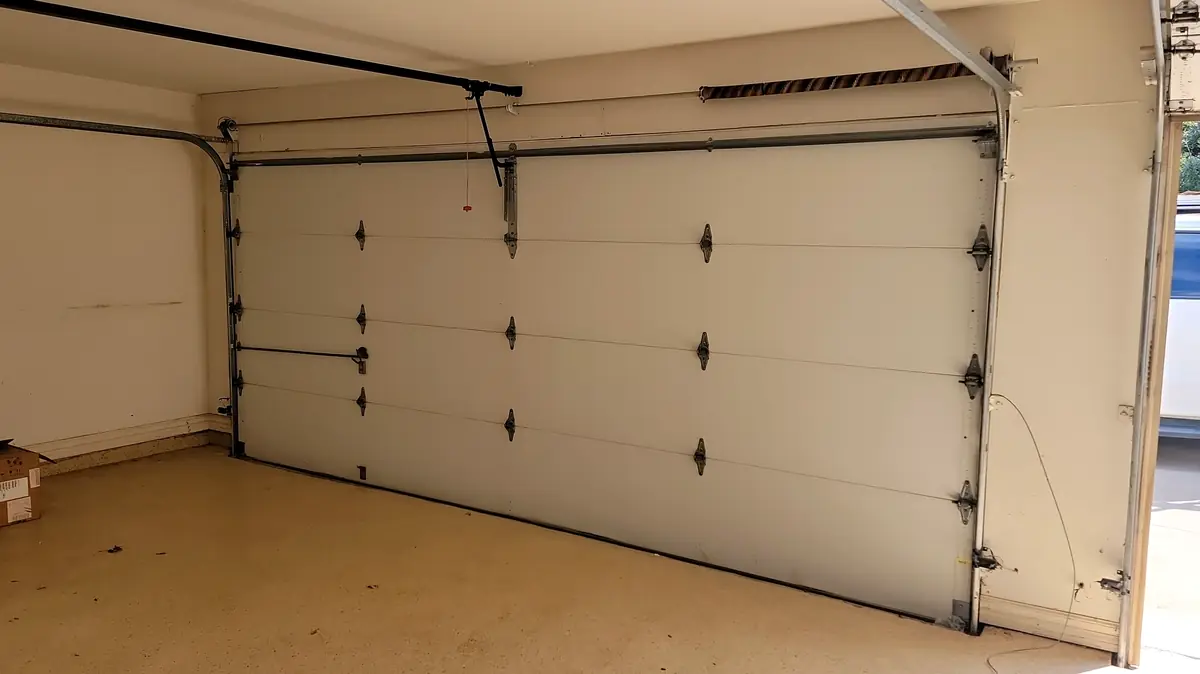
Wear and weather in Austin
Austin's long run of hot months dries out the grease on rollers, hinges and bearings. In 2011, when the city logged 90 days at 100 degrees or more, many doors that had run quietly early in the year were squealing and shuddering by fall.
February or March, before the heat builds, is a good time for a tune-up. The technician lubricates moving parts, tightens hinges and brackets, checks spring balance and cable wear, replaces cracked weatherstripping and tests the auto-reverse. In Hyde Park, where the biggest building boom ran from 1924 to 1935, garages often need worn rollers and loose track brackets dealt with in the same visit. In Mueller, the work is mostly adjustment. Travis Heights doors, many on houses from the 1920s growth, get the same close look at the framing. Grit is wiped from the tracks first, so fresh grease does not turn to paste.
Noises worth acting on
A garage door should sound about the same every day. A change is the signal.
- Louder than last year: rollers and hinges are wearing or dry.
- Jerky movement with a shudder: the door is binding in the tracks or is out of balance.
- The opener strains or hums longer: the springs have weakened and the motor is lifting more than it should.
- Clicking at one spot in the travel: a cracked hinge or a flat-spotted roller.
Upkeep that's safe to do yourself
- Once or twice a year, apply a little garage-door lubricant to the hinges, the roller bearings and the springs. Wipe away any drips.
- Keep grease out of the tracks. Clean them with a cloth instead, since grease traps dirt.
- Check the auto-reverse: set a board flat on the floor under the door and close it. The door should hit it and rise again.
- Inspect without touching: look for broken strands on the cables and gaps in the springs.
Keep your hands off the springs, the cables and the bottom corner brackets. All of them carry heavy tension.
A typical maintenance visit
Most of the time goes into the door itself. Its balance is tested and the springs are adjusted. Bolts are snugged up. Rollers, hinges and cables are checked for wear and broken strands, and the tracks are cleaned and squared. Then everything that should be oiled is oiled, and the opener's safety features are tested. On a loud door, nylon rollers in place of steel ones usually make the biggest difference. You approve any part, and its price, before it goes in.
Around Austin
- Tarrytown: West of downtown on the former Woodlawn estate; its first phase opened on 4 November 1934.
- Allandale: North central Austin along Shoal Creek Boulevard, known for large lots and mature trees.
See the full Austin service area.